


India’s scrap buyers face an EU cutoff. The next deadline is October 16
Consultation closes on October 16, 2026. Proposed EU waste-export rules could interrupt India’s metal-scrap supply from May 21, 2027.
The European Commission’s proposed list for non-OECD waste exports would leave India unable to receive EU metal waste, including aluminium scrap, when the relevant rules take effect, Reuters reported. That is a serious supply risk for Indian buyers. It is not an immediate ban.
India applied to remain eligible under the EU’s revised waste-shipment regime, according to the European Commission’s implementation page. The proposal published on September 18 does not grant the required metal-waste exemption, Reuters said. A public consultation is open until October 16, 2026, and the operational restriction is due on May 21, 2027.
The European Commission’s September 18 notice says it aims to finalise the list by the end of 2026. The consultation deadline is a chance to contest the proposal; it is not the date shipments would stop.
India’s application remains subject to approval. The proposed list also uses a different mechanism from the 15% aluminium-scrap export duty the EU abandoned earlier in September.
What the proposed rule changes
India bought 3.1 million tonnes of recyclable raw materials from the EU in 2024, making it the third-largest destination, Eurostat reported. That category includes more than the metal waste covered by this proposal.
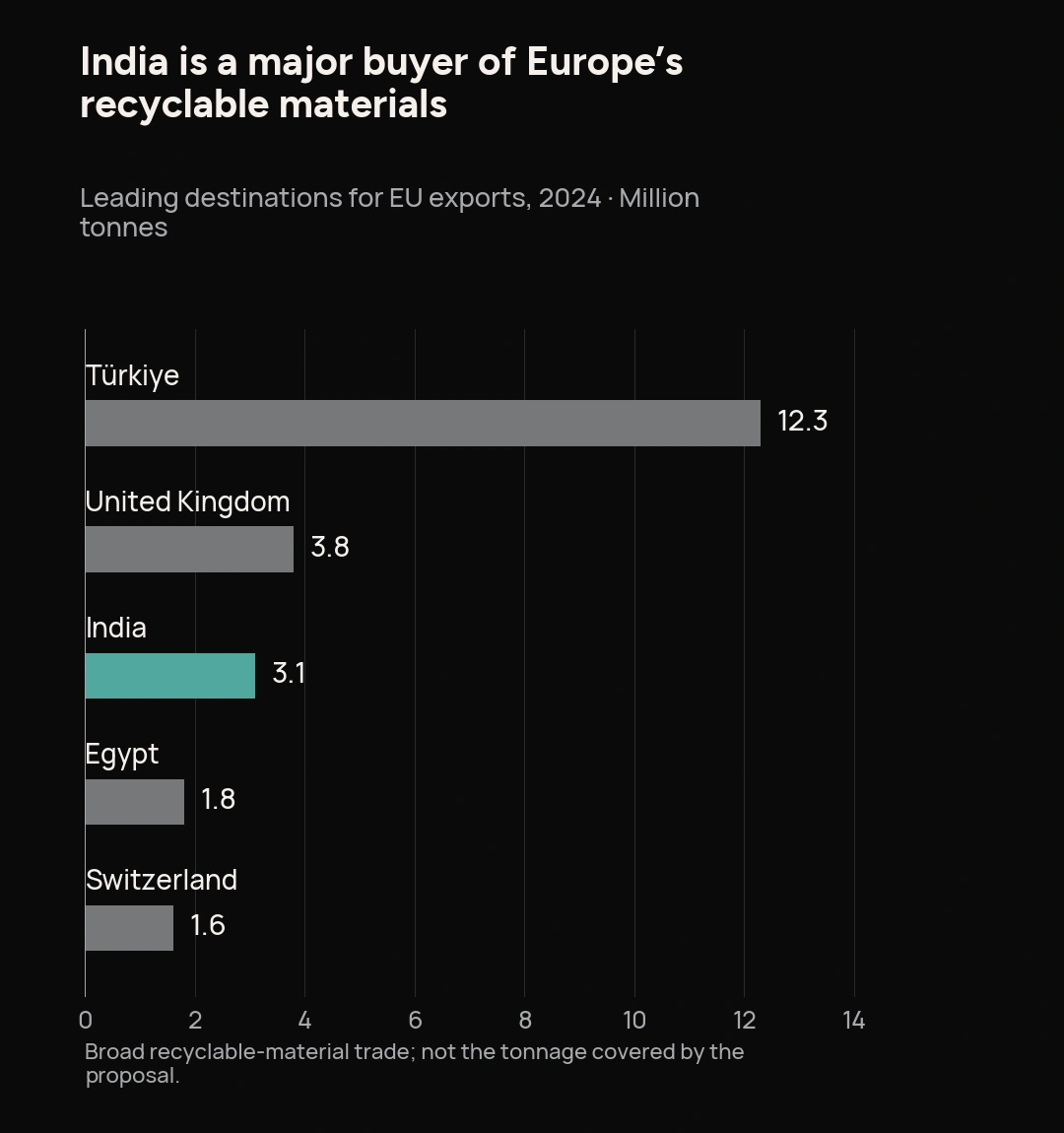
Chart: Technology Index · Data: Eurostat
The revised system starts with a default restriction for non-OECD destinations and then permits specified waste streams to countries that demonstrate environmentally sound treatment. The Commission says applicant authorities must provide evidence about their capacity and oversight. India was among the countries that submitted a request.
The Commission said 32 non-OECD countries applied; Reuters reported the requests spanned non-hazardous waste categories including paper, plastics, rubber, metal and glass. Metal faces closer scrutiny because waste can contain persistent and toxic heavy metals.
For Indian importers, the commercial issue is eligibility. If India is not approved for the relevant metal categories, EU exporters cannot continue those shipments through ordinary commercial negotiation. The buyer cannot solve the problem by agreeing to a higher price.
The current decision window is therefore regulatory, not logistical. Companies can map exposure now, but the final supply effect depends on the adopted list and the precise waste codes covered.
The tonnage exposed to a cutoff will depend on the waste codes in the final list. Broader recycling-trade figures show the size of the relationship, but cannot establish how much Indian supply would be blocked.
Why the abandoned duty is a different mechanism
Metals accounted for 19 million tonnes of the EU’s recyclable-material exports in 2024, more than half the total. Retaining a larger share would change the supply available to processors outside Europe.
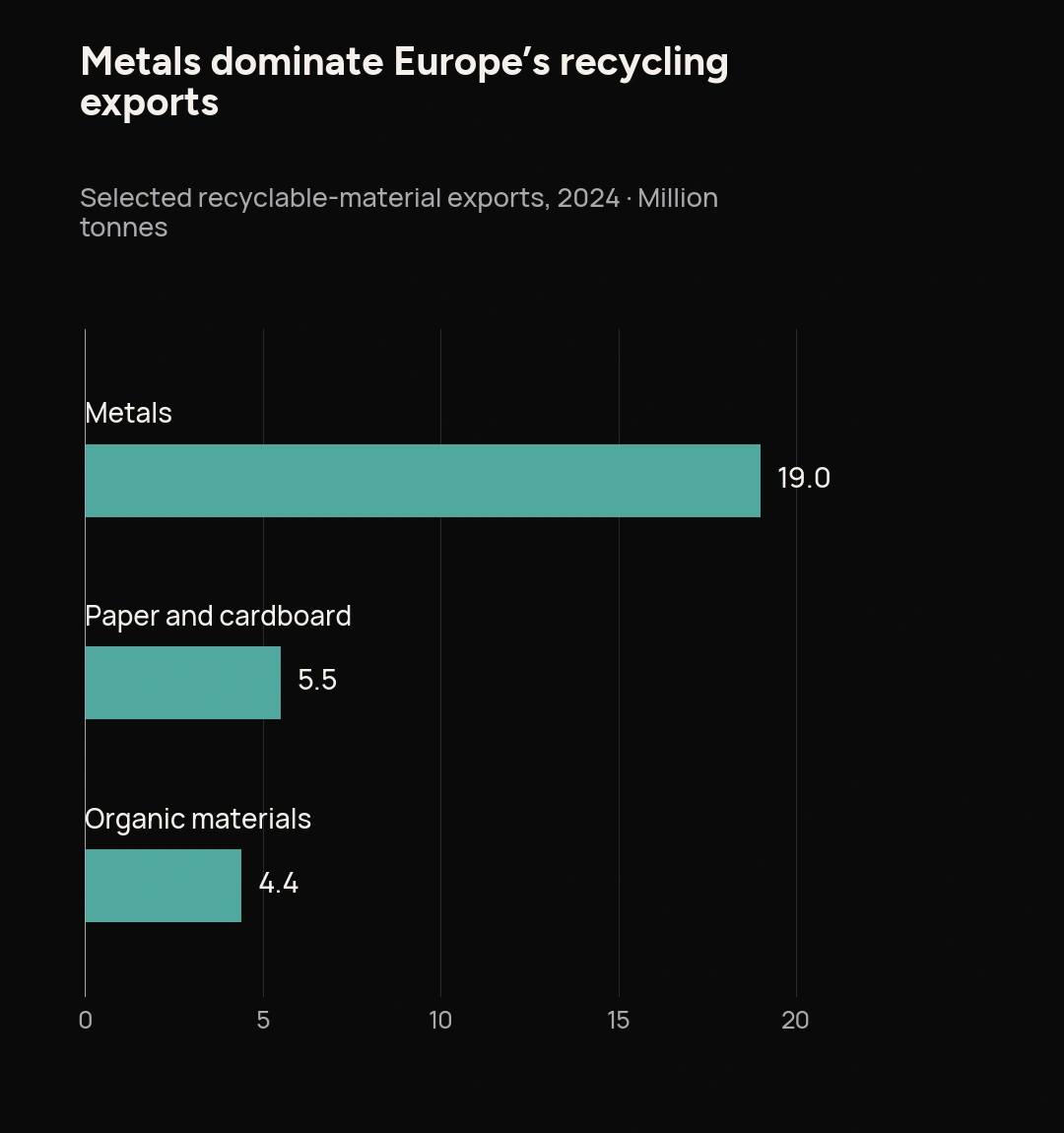
Chart: Technology Index · Data: Eurostat
The Commission had considered a 15% export duty on aluminium scrap and then dropped that plan after disagreement and pressure from India, Reuters reported. A duty would have kept trade legally available while making it more expensive. Exclusion from the authorised-country list can stop covered shipments altogether.
The distinction also changes the corporate response. A tax risk can be modelled through margins and pass-through. An eligibility risk requires alternative supply, different material inputs or regulatory approval. Buyers need to know which EU-origin grades are material to their plants and whether substitutes have the same quality and processing characteristics.
European producers have a different incentive. Industry group European Aluminium had supported measures that keep more low-cost scrap within the bloc, Reuters reported. The waste rule is formally grounded in environmental treatment standards, but it can also tighten the amount of secondary material available to foreign processors.
What Indian manufacturers should audit
First, importers should identify the waste codes, tonnage and EU countries in their current supply. “Metal scrap” is too broad for an operating decision. Aluminium processors, steel recyclers and traders may face different coverage and substitution options.
Second, companies should separate contracted supply from eligible supply. A purchase contract does not override a shipment prohibition. Contract clauses covering regulatory change, force majeure and replacement origin deserve review before the effective date.
Third, procurement teams should test alternatives for specification, price and lead time. Domestic scrap, non-EU imports and primary metal are not perfect substitutes. Changing the input mix can alter energy use, working capital and product quality.
Fourth, industry bodies and the Indian government need to understand why the application failed for the relevant categories, if the proposed exclusion is maintained. The Commission’s process is evidence-based on paper. The useful response is therefore documentation of treatment standards, facility controls, enforcement and traceability.
The exposure is uneven across companies
Importers with long-term EU suppliers and specialised grades may have the highest switching cost. Traders with a broader origin mix may be able to redirect purchases more quickly, although freight and working capital can change. Producers able to use primary metal face a different cost and emissions profile from recyclers built around scrap.
That variation argues against a single sector-wide loss estimate. A company-level assessment should start with physical tonnes by code and origin, then add replacement price, shipping time, inventory and customer-specification constraints. Only after that can the effect on margins or output be modelled.
There may also be a timing mismatch between regulatory decisions and procurement cycles. Buyers often contract material ahead of delivery. If the final list is adopted close to the effective date, companies could hold agreements for shipments that can no longer move as planned. Transition and grandfathering language in the final act will therefore be commercially important.
Lenders and insurers will read the same language. A plant that depends on EU-origin scrap may face tighter borrowing terms or coverage exclusions if supply becomes legally uncertain. Management should bring quantified sourcing exposure into financing discussions before the rule takes effect, not after a shipment is stopped.
The proposal still has decision points
The consultation runs until October 16, 2026. Reuters said the delegated list will be updated regularly, at least every two years, and countries may reapply. That makes exclusion reversible, but not costless. A supply interruption can redirect trade and encourage EU processors to sign contracts elsewhere.
The Commission says the non-OECD export restrictions take effect on May 21, 2027, with the first authorised-country list due by the end of 2026. The adopted list will determine the waste categories each destination can receive.
India applied, but the Commission’s proposal does not authorise the relevant EU metal-waste exports to India. Consultation and final adoption remain ahead. Companies have months, not years, to quantify exposure and support the evidence needed for an exemption.
One email. Saturday morning.
The week that mattered.
The five stories you needed to read, the data point of the week, and what to watch. From Technology Index editors. No ads, no fluff.